
Cart
0
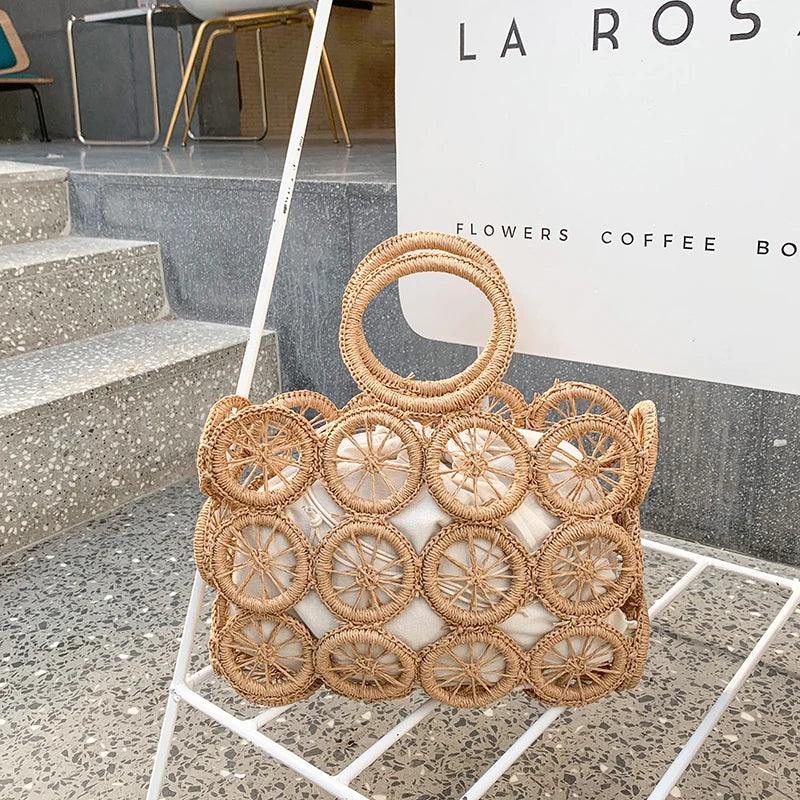
The bag is one of the oldest, most useful, and fascinating accessories in the history of human attire. Today, we tend to think of it as a fashion item: a shoulder bag, an evening bag, a leather bag, a fabric bag, a straw bag, or a crocheted bag. But long before the bag became a symbol of style, femininity, status, and personality – it was first and foremost a simple solution to a basic need: to carry things from place to place.
From ancient times to the present day, the bag has undergone a long journey. It has changed according to periods, cultures, materials, social status, roles of women and men, the development of commerce, fashion, and urban life. From small pouches that carried coins and seeds, through ornate purses, travel bags, elegant handbags, and work bags – to the modern world where every woman can choose a bag according to her lifestyle, occasion, season, and personality.
In the collections of Chic Avenue, you can see how this history continues to live today: leather bags that continue a tradition of elegance and classicism, designer fabric bags that recall ancient daily utility, straw bags that connect to natural materials, and crocheted bags that bring a sense of handmade craftsmanship and personal texture.
A Simple Beginning: The Bag as a Useful Tool
The origin of the bag is linked to a very basic human need: to carry objects from place to place. Even before there were wardrobes, pockets, suitcases, or wallets as we know them today, people needed to carry food, stones, seeds, small tools, coins, spices, and personal belongings. The solution was simple: a small sack, a pouch, a tied cloth, or processed leather.
In ancient times, the bag was not a fashion item but a survival tool. It helped people hunt, gather, trade, and move from place to place. The materials were natural and readily available: leather, linen, wool, plant fibers, straw, and ropes. In this sense, the first bags were closer to what we know today as fabric bags, straw bags, or crocheted bags – simple, flexible, and useful items.
This connection between natural material and daily use exists to this day. Collections such as straw bags or crocheted bags take us back, in a sense, to the roots of the bag: natural materials, a handmade feel, a free look, and simple utility.
The Bag in the Ancient World
In the ancient world, the bag was primarily used for carrying small and valuable items. In Egypt, Greece, and Rome, pouches, small bags, and satchels were used to carry coins, jewelry, personal tools, and religious artifacts. The bag was strongly associated with commerce, travel, and public life.
In periods when clothing did not include built-in pockets, an external solution was needed for carrying items. Therefore, small pouches were tied to belts, hung on the body, or held in the hand. Both men and women used them, but over time, bags began to acquire different social and stylistic meanings according to culture, status, and role.
What is interesting is that even in ancient times, bags were not just functional. Some were adorned with embroidery, beads, metals, or patterns, especially when they belonged to a higher social class. Here begins the bag's journey from a purely functional item to an accessory that tells something about its wearer.
The Middle Ages: Pouches, Belts, and Social Status
In the Middle Ages, the bag was closely linked to the belt. People carried small pouches tied to their waists, used for coins, prayer tools, medicinal herbs, keys, and personal items. Since clothing still lacked pockets as we know them today, the pouch was an essential item.
During this period, the bag began to reflect social status. Simple pouches were used by ordinary people, while ornate, embroidered, or more expensive material pouches were used by those of higher status. The bag became an item that signified not only need but also belonging, taste, and economic means.
This influence can also be seen in the modern world: a bag can still convey style, quality, elegance, or lightness. For example, a leather shoulder bag conveys a very different feeling from a fabric shoulder bag. Both are useful, but each tells a different fashion story.
The Renaissance: The Bag as a Designed Item
During the Renaissance, clothing became richer, more complex, and more adorned – and bags changed accordingly. Small bags and pouches received embroidery, patterns, beads, and embellishments. They were used not only for carrying objects but also as part of the overall look.
Women began to use smaller, more delicate bags, sometimes as part of a festive or social appearance. The bag began to acquire meaning as a personal taste item. Those who could afford more elaborate items chose a bag that complemented their outfit, the occasion, and their social status.
Even today, a small bag can transform an entire outfit. Collections like small leather bags, small fabric bags, or leather evening bags continue this idea: a small bag designed not just to hold things, but also to complete a look.
The Pocket Revolution and the Changing Role of the Bag
One of the interesting aspects of bag history is its connection to pockets. For long periods, men's clothing acquired more convenient pockets, while women's clothing did not always include functional pockets. As a result, women continued to need external bags for carrying personal items.
This disparity contributed to the bag gradually becoming a central female accessory. When women could not rely on garment pockets, the bag became an essential part of their appearance and their movement in the world. It was both practical and fashionable, both personal and social.
Even today, although fashion has changed, many women still rely on a bag to keep all their important things in one place. The women's everyday bag collection expresses precisely this need: a bag that accompanies life itself, not just a special occasion.
The 18th and 19th Centuries: The Emergence of the Modern Handbag
In the 18th and 19th centuries, the handbag as we know it today began to develop significantly. Women's clothing sometimes became lighter and more form-fitting, and internal pouches or hidden pockets were no longer always suitable. Women began to carry small bags by hand, sometimes called reticules – delicate, designed, and personal bags.
These bags marked an important change: the bag was no longer just a solution for carrying objects, but part of a conscious female appearance. It was chosen according to the outfit, the occasion, and personal taste. Women began to use the bag as a way to add elegance, color, texture, and character.
This idea still exists today in evening bags and small bags. When you choose a leather evening bag or a leather handbag, you are continuing a long tradition of the bag as an item that elegantly completes an outfit.
The Industrial Revolution: More Bags, More Styles
The Industrial Revolution also transformed the world of bags. Mass production, railways, international trade, and frequent travel created a need for new types of bags. Travel bags, work bags, larger bags, and bags made from a wider variety of materials appeared.
Modern life demanded new solutions. People traveled more, worked outside the home, moved between places, and carried more belongings with them. The bag became an accessory suitable for a changing pace of life. It was no longer just a small item for carrying coins, but a portable tool that accompanied a person throughout the day.
This influence is still evident today in large and practical bags. Collections like large fabric bags, large leather bags, and women's laptop shoulder bags continue the tradition of a bag that suits an active life, work, and movement.
The 20th Century: The Bag as a Fashion Symbol
In the 20th century, the bag became one of the central symbols of female fashion. With the development of fashion houses, magazines, cinema, and consumer culture, the bag acquired a new status. It was not just a practical item, but a symbol of taste, status, femininity, and personality.
Throughout this century, many styles appeared: structured handbags, shoulder bags, clutches, evening bags, work bags, and everyday bags. Each decade brought different shapes, different materials, and a different attitude towards the bag. In some years the bag was small and elegant, in other years larger, softer, and more practical.
This development opened up many more options for women. Instead of one bag for every situation, it was possible to choose a bag according to the occasion, outfit, lifestyle, and mood. This is precisely the idea behind a modern bag wardrobe: a leather shoulder bag for an organized day, crocheted bags for a unique look, straw bags for summer, and designer fabric bags for routine.
Leather Bags: A Classic That Endures
Leather bags are among the types most associated with elegance, quality, and a timeless look. Throughout history, leather has been an important material due to its durability, flexibility, and luxurious appearance. It was used for pouches, bags, belts, and useful accessories even in ancient times.
Today, a leather bag continues to convey an organized and mature look. It is suitable for work, events, meetings, and outings where one wants to appear more polished. Collections like leather bags, leather shoulder bags, and leather handbags continue this classic line.
The beauty of a leather bag is that it is not dependent on just one trend. It can be integrated into many looks and remain relevant for a long time. Therefore, it is considered one of the most important types of bags in any woman's wardrobe.
Fabric Bags: Practicality Back in Fashion
Fabric bags take us back to the simple roots of the bag: soft material, easy to carry, daily use, and an effortless look. In the past, fabric was one of the most accessible materials for creating simple sacks and bags. Today, it receives a new fashion interpretation.
Fabric bags are suitable for women who love a natural, everyday, and light look. They are perfect for errands, shopping, studying, light work, and casual outings. The designer fabric bags collection shows how a simple material can become a fashionable and useful item.
Also, a fabric shoulder bag, a fabric tote bag, and a large fabric bag express the connection between comfort and modern style.
Straw and Crocheted Bags: A Return to Natural Materials
Straw bags and crocheted bags are beautiful examples of how modern fashion repeatedly returns to natural materials and handmade craftsmanship. Straw, natural fibers, and crochet were part of the carrying world since ancient times. They were used to create baskets, sacks, nets, and useful bags.
Today these materials receive new fashion significance. A straw bag conveys vacation, summer, and naturalness. A crocheted bag conveys softness, uniqueness, and personal character. They are suitable for women who are looking for a bag that doesn't look like everyone else's, but rather adds texture and a story to the look.
In collections like straw bags, summer straw bags, crocheted bags, and crocheted shoulder bags, you can see how ancient materials continue to be relevant in modern fashion.
The Modern World: A Bag for Every Woman and Every Purpose
Today, the bag is more personal than ever. There is no longer one "right" style. A woman can choose a bag according to her work, her body, her style, her mood, and the occasion. There are bags for everyday, bags for evening, bags for studying, laptop bags, vacation bags, and special bags used primarily to complete an outfit.
The choice is no longer limited to social status or rigid dress codes. Everyone can choose what suits them. Someone who likes a casual look will choose a fabric bag. Someone who likes elegance will choose a leather bag. Someone who likes naturalness will choose a straw bag. Someone who likes texture and character will choose a crocheted bag. Someone who needs space will choose a large bag. Someone going out in the evening will choose a small bag.
Collections such as all products, new bags, and best sellers allow every woman to find the bag that speaks her language.
How History Helps Choose a Bag Today?
The history of the bag teaches us that a good bag has always been a combination of necessity and beauty. It started as a useful tool, became a status symbol, evolved into a fashion accessory, and today it combines all these roles. Therefore, when choosing a bag, it is worth asking not only if it is beautiful, but also if it fits your life.
If you need a bag for routine, look for practicality. If you want a bag for an event, look for elegance. If you like a natural look, choose a material that tells that story. If you want a bag that will accompany you for a long time, look for a design that suits more than one trend.
The modern bag is the result of thousands of years of change, but the basic principle remains the same: it should serve you, accompany you, and make you feel good.
Summary: From the Ancient World to Chic Avenue
The historical journey of the bag is a fascinating journey between utility, culture, fashion, and personality. From the simple pouches of the ancient world, through the satchels of the Middle Ages, the handbags of the 19th century, the fashion bags of the 20th century, and to the modern bags of today – the bag has always been a part of human life.
What has changed is the way we use and understand it. Today, a bag is both a useful tool, a fashion accessory, a personal expression, and part of a smart wardrobe. It can be elegant, natural, everyday, festive, large, small, soft, structured, classic, or unique.
In Chic Avenue's collections, you can find all this continuity in one place: leather bags that continue a classic tradition, designer fabric bags that connect comfort with everyday life, straw bags that take us back to natural materials, crocheted bags that add character and texture, and women's everyday bags that show how the bag continues to be an integral part of modern life.
Ultimately, the bag has come a long way – but it remains exactly what it always was: a relatively small item with great significance. It holds important things, completes an outfit, tells a personal story, and accompanies us in every era anew.

